

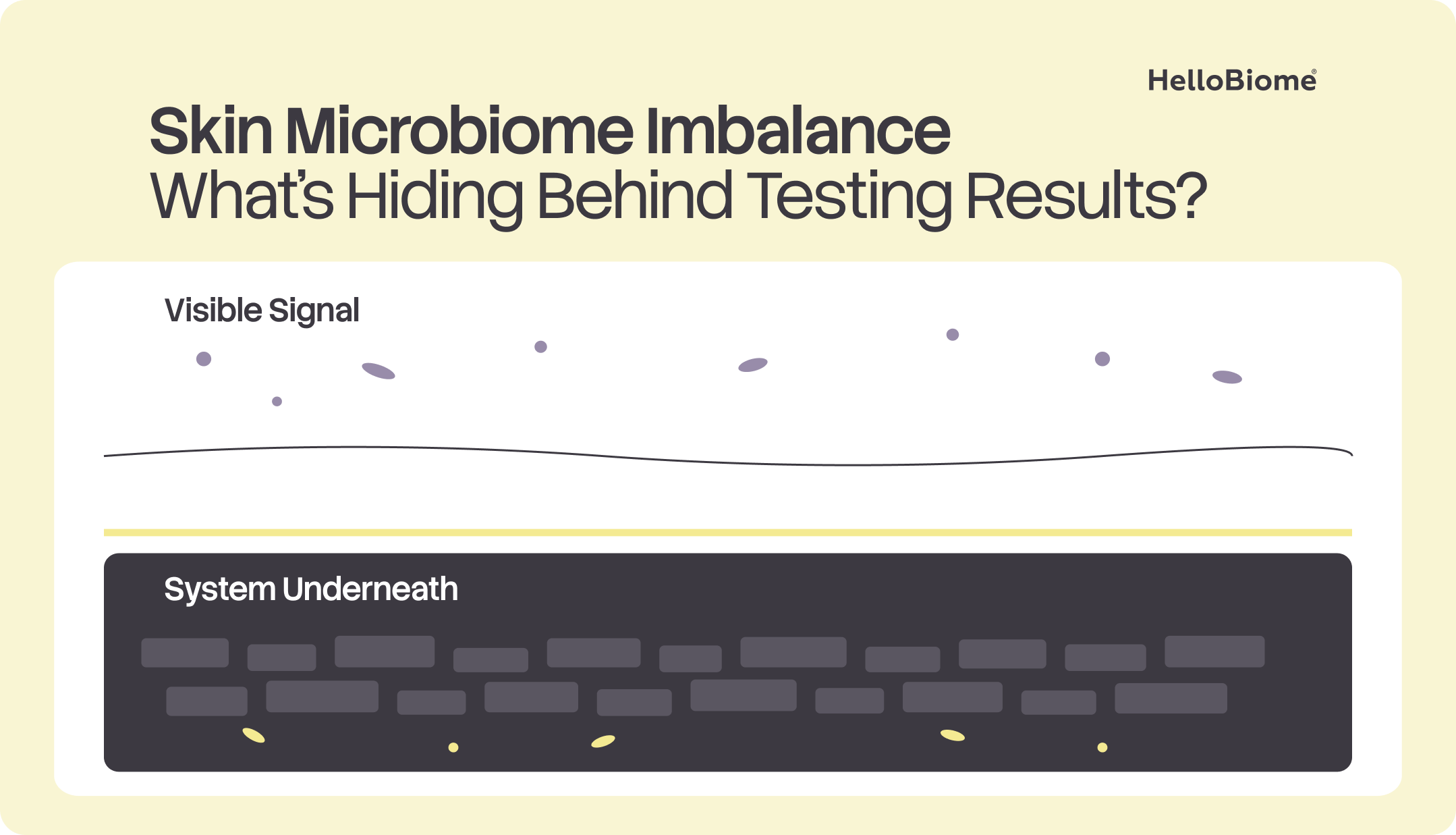
A visible result and a biological result are not the same thing — and a product can deliver one while working against the other.
Less redness. Fewer breakouts. Better hydration. These are the results a product is built and tested to deliver — and they’re also where most testing stops. Underneath those visible outcomes is a different system entirely: the balance of the skin’s microbial community, changing in ways no redness score or hydration reading was ever designed to catch.
This imbalance is called “dysbiosis,” and it is already evident in the three most common targets of claims in the beauty and health industry: rosacea, eczema, and skin aging. Each follows the same pattern: a visible symptom driven by a change in the microbiome—a change that standard tests were never designed to detect.
Here’s where this gap comes from, what’s actually needed to close it, and what’s at stake when microbiome-based claims turn out to be unfounded.
What Microbiome Dysbiosis Actually Is
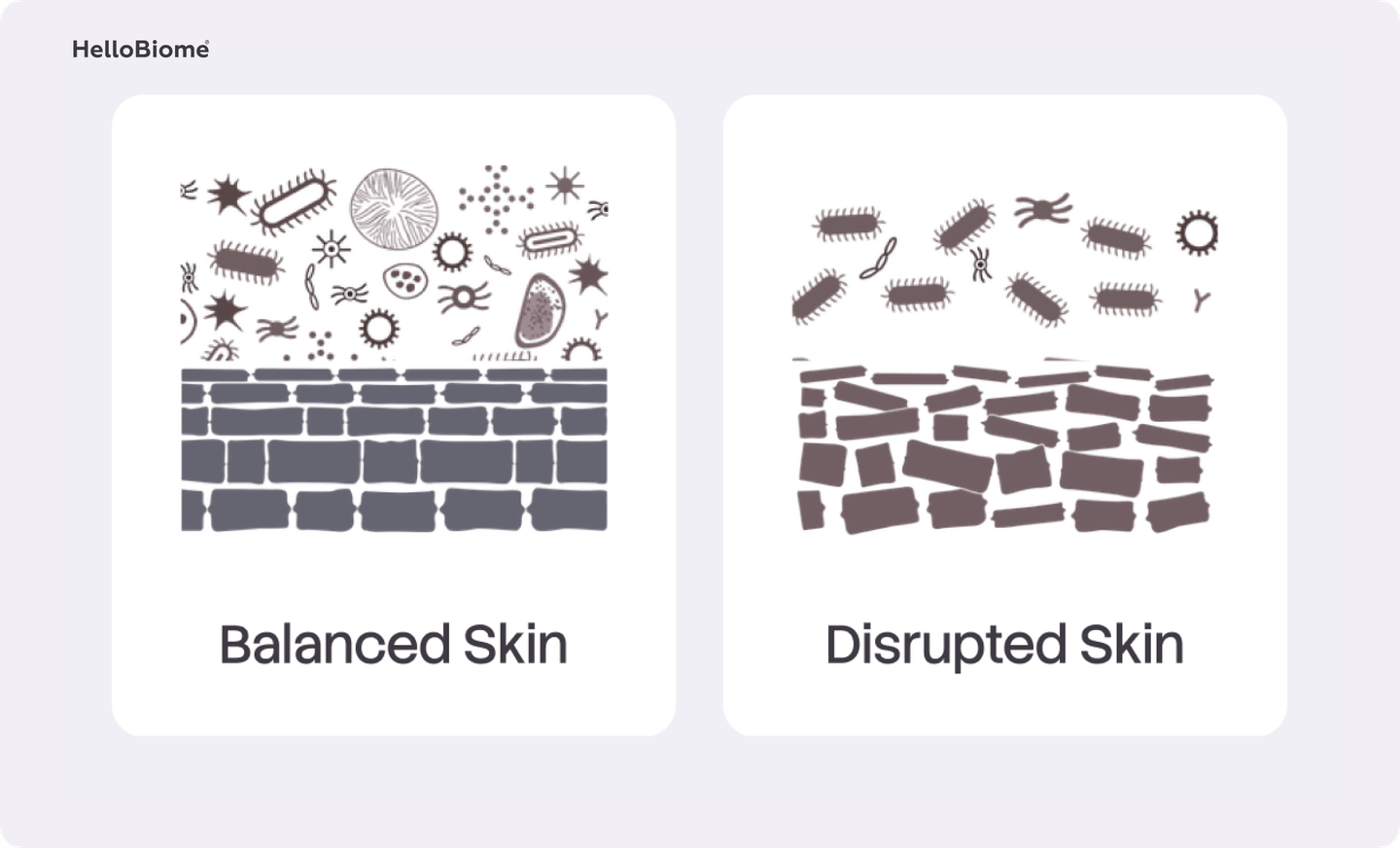
Dysbiosis is a skin microbiome imbalance, a change in the microbial community — the state that irritation, sensitivity, breakouts, inflammation, and visible aging follow from. It isn’t a single symptom or a single organism out of place; it’s a shift in the composition and balance of the whole community living on skin. In dysbiosis, skincare that looks like it’s working on the surface can still be disrupting that balance underneath.
- Sensitivity and irritation track with changes in microbiome composition on rosacea-prone and sensitive skin.
- Inflammation follows a similar pattern in eczema, where an altered microbiome and impaired barrier feed each other in a cycle that shows up as visible dermatitis.
- Aging skin changes too — bacterial diversity increases and specific genera shift as skin ages.
Sensitive Skin / Rosacea
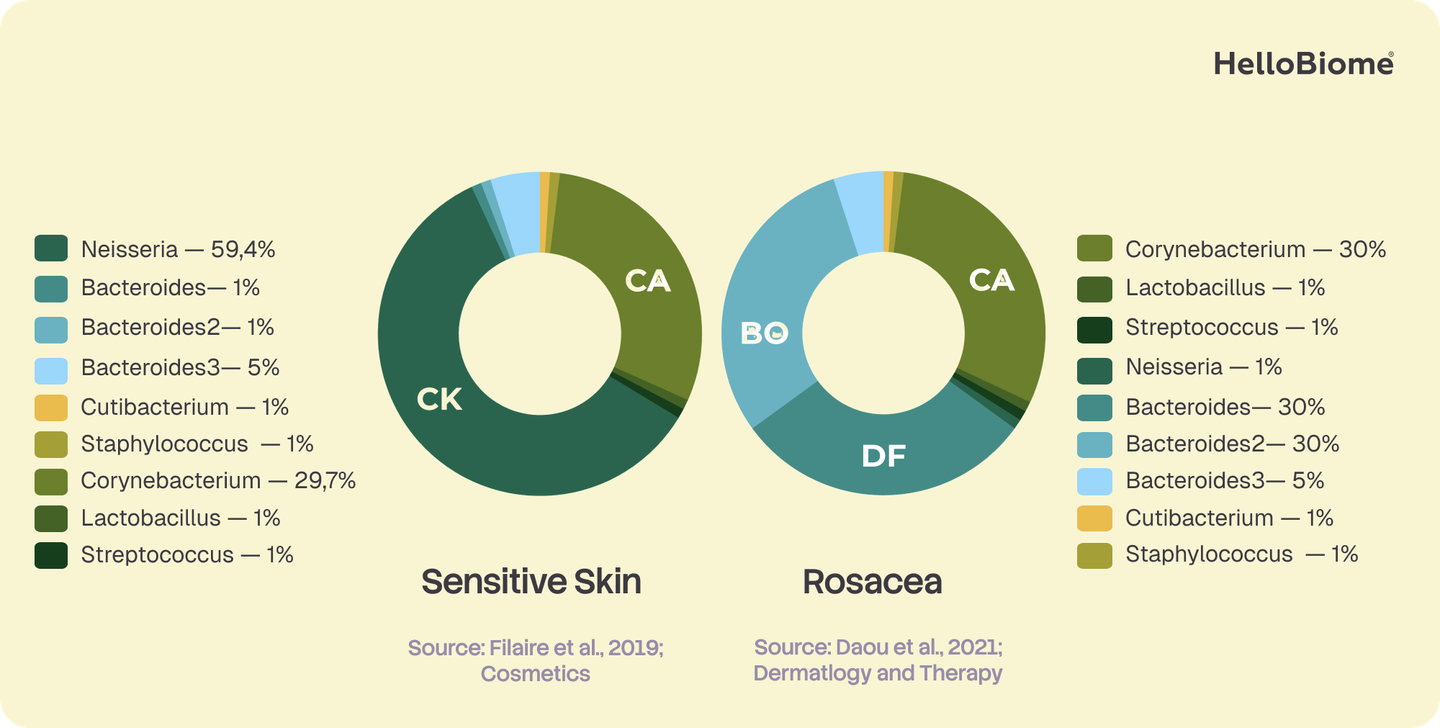
The rosacea skin microbiome, like sensitive skin’s, shows a distinct profile compared to balanced skin. Balanced skin is dominated by Cutibacterium acnes with a smaller presence of Staphylococcus epidermidis; sensitive skin shifts toward Corynebacterium kroppenstedtii (Filaire et al., 2019), and rosacea-affected skin introduces Bacillus oleronius and Demodex folliculorum alongside C. acnes (Daou et al., 2021).
That change often shows up before visible symptoms do, which is exactly why a product tested only against redness or sensitivity scores can miss it entirely.
Eczema
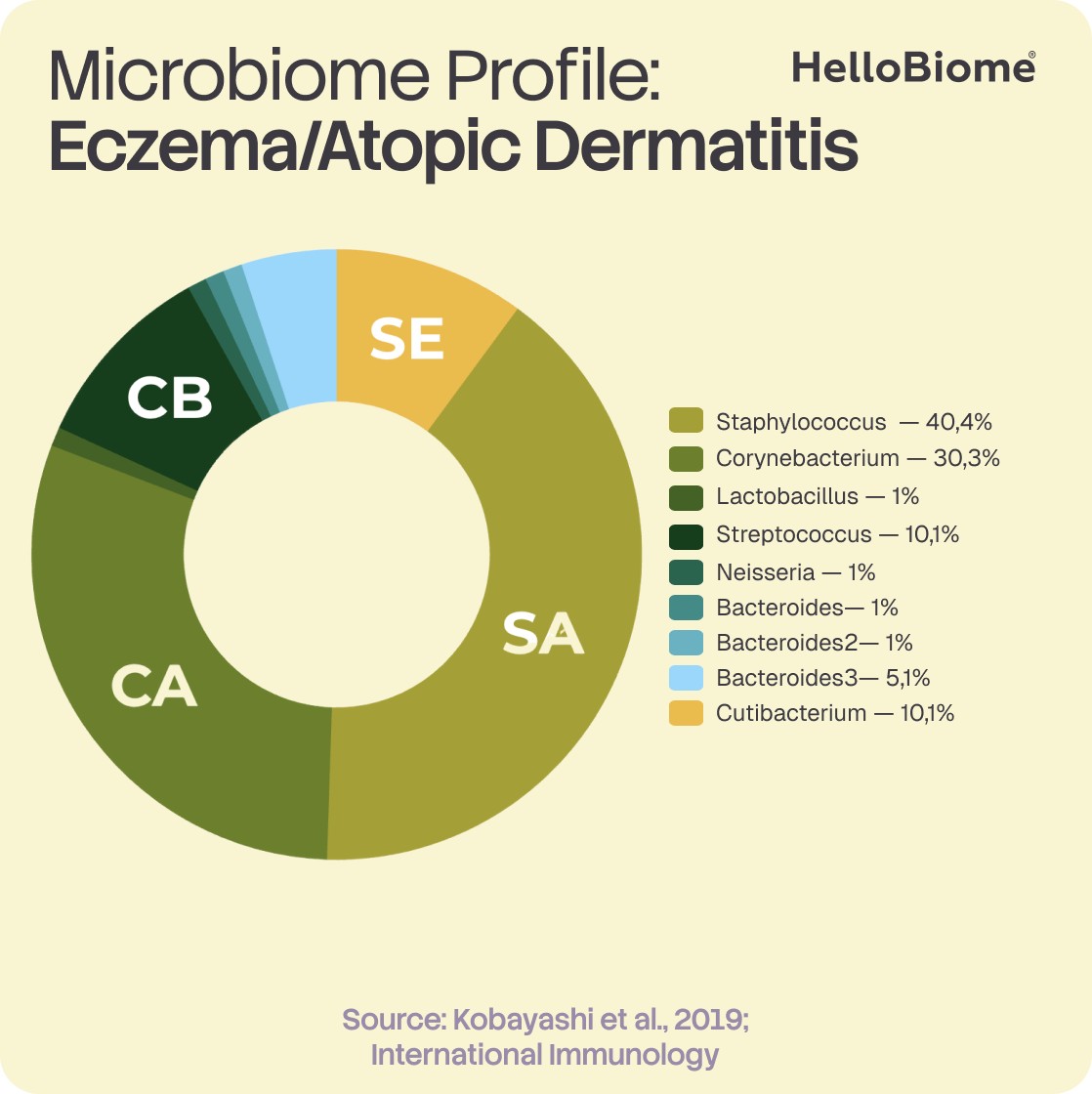
Eczema microbiome imbalance appears as an altered composition compared to healthy skin — Staphylococcus aureus expands while Cutibacterium acnes recedes, alongside changes in Staphylococcus epidermidis and Corynebacterium bovis (Kobayashi & Nagao, 2019). This is part of the cycle that causes visible dermatitis, rather than merely a side effect of it.
Aging Skin
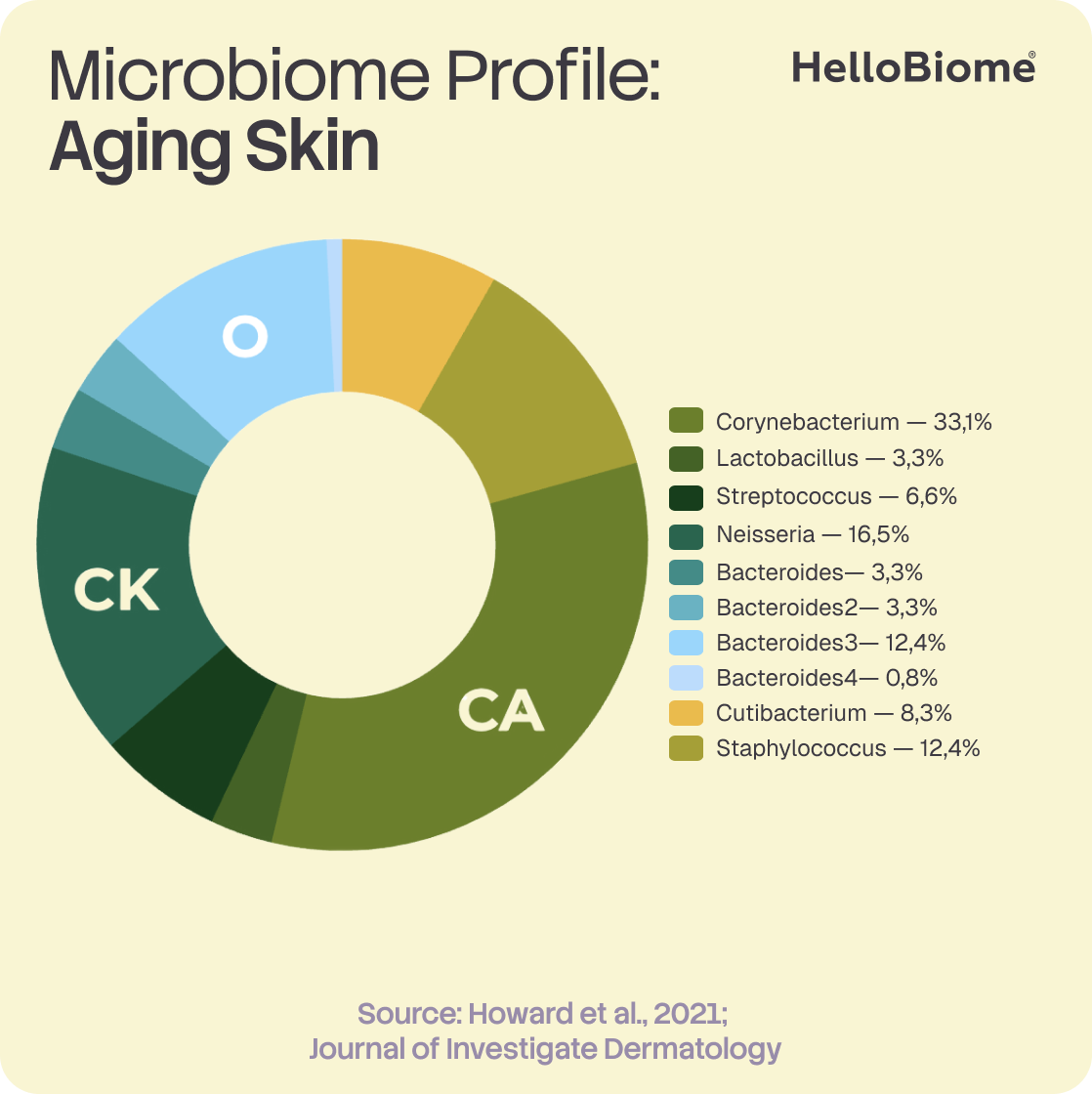
Aging skin microbiome changes track closely with what’s visible on the surface: bacterial diversity increases overall, while Cutibacterium acnes recedes alongside genus-specific changes in Corynebacterium species (Howard et al., 2021). A product marketed against visible signs of aging isn’t necessarily addressing this — the two don’t automatically move together.
Rosacea, eczema, and skin aging all point to the same thing: the visible symptoms and the underlying microbiological changes that cause them do not occur simultaneously. This applies to both skin conditions and the methods used to test treatments designed to address them.
The Visible Signal vs. the System Underneath
Products are formulated and tested against the visible signal — less redness, fewer breakouts, better hydration. None of those measurements say anything about the system producing them.
What gets tested and what actually happened to the microbiome are two separate questions with two separate answers. Cosmetic claim testing evaluates redness scores, breakout counts, and hydration readings — the industry’s default definition of a product “working.” Does it analyze the microbiome that produces those results?
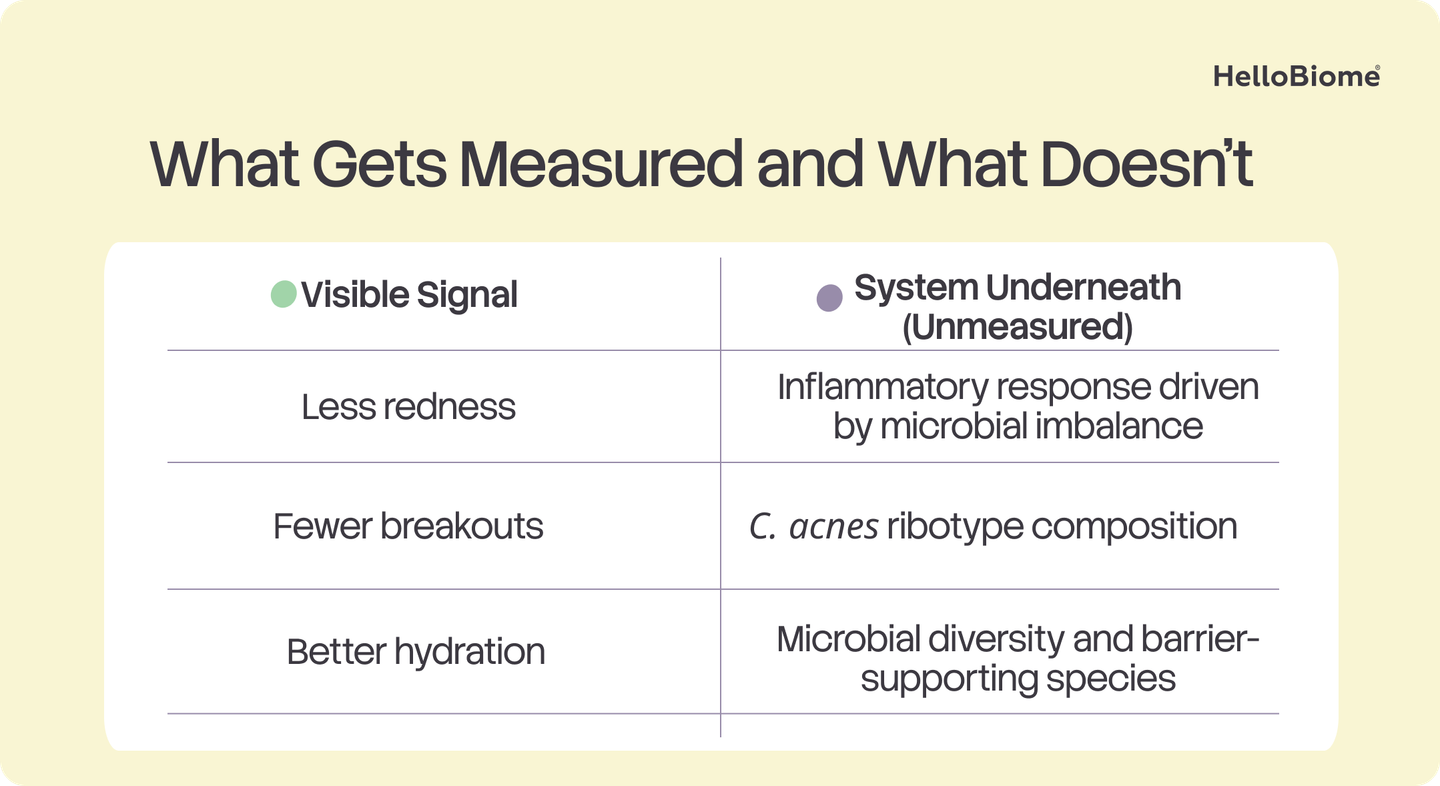
A product can reduce visible redness while the underlying inflammatory response continues, or improve hydration without moving microbial diversity at all. Testing built only for the visible signal can’t detect what happened to the system underneath.
What Measuring Balance Actually Looks Like
Microbiome validation in skincare means analyzing species — bacteria and fungi alike — and comparing that profile at two points in time, rather than reading it once and calling it proof.
Species-Level, Not Just Taxonomic Groups
Species-level microbiome testing exists because a genus-level reading can look stable while the species underneath it change entirely. Different phylotypes of the same organism behave differently on skin — C. acnes composition, for example, differs meaningfully between healthy and acne-affected skin. Species-level data is what actually shows whether that balance moved.
Cutibacterium acnes ribotype comparison
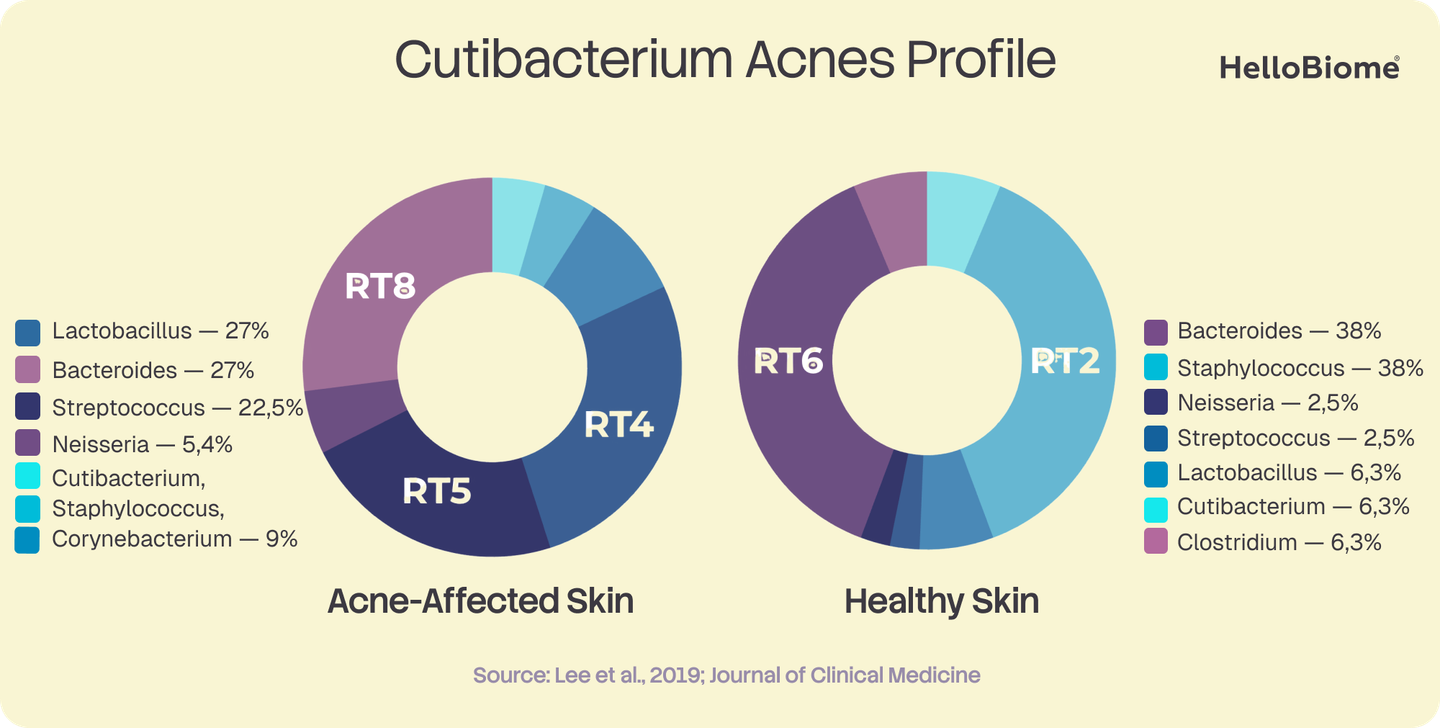
C. acnes isn’t one uniform organism — it exists as several distinct ribotypes (RT), and which ones dominate on skin differs between healthy skin and acne-affected skin. The chart compares that ribotype mix side by side. Healthy skin shows one distribution; acne-affected skin shows a different one. A test that only reports “C. acnes present” misses this entirely — it’s the ribotype composition, not just the presence of the species, that separates balanced skin from disrupted skin.
Bacteria and Fungi, Both
Bacterial and fungal skin testing accounts for both — a product’s effect on one doesn’t predict its effect on the other. Measuring only bacteria, the more common and more accessible test, leaves half the system unmeasured.
Before and After, Not a Single Snapshot
A single microbiome reading shows a state, not an effect. Only before and after microbiome testing — the same skin, the same panel, measured at two points — can show whether a product changed anything at all.
Raw species and community data don’t tell a team whether a product helped or hurt — it has to be translated into a single, comparable result first.
When an Unmeasured Claim Meets Scrutiny
The gap between what a product visibly does on skin and how it affects the microbiome underneath hasn’t stopped brands from claiming it’s closed. More are now speaking to microbiome balance itself — the layer most testing doesn’t reach — and that’s exactly where a claim either survives scrutiny or comes apart.
A microbiome balance claim rarely goes unquestioned for long. Retailer claim substantiation comes first — legal teams require the data before a product reaches the shelf. A regulator requests the data behind the claim. A journalist puts the question to the formulator directly.
None of those questions can be answered with a visible-result test. They require the biological data the claim is actually about — the measurement most testing never runs, and one that tends to surface only after the claim has already shipped.
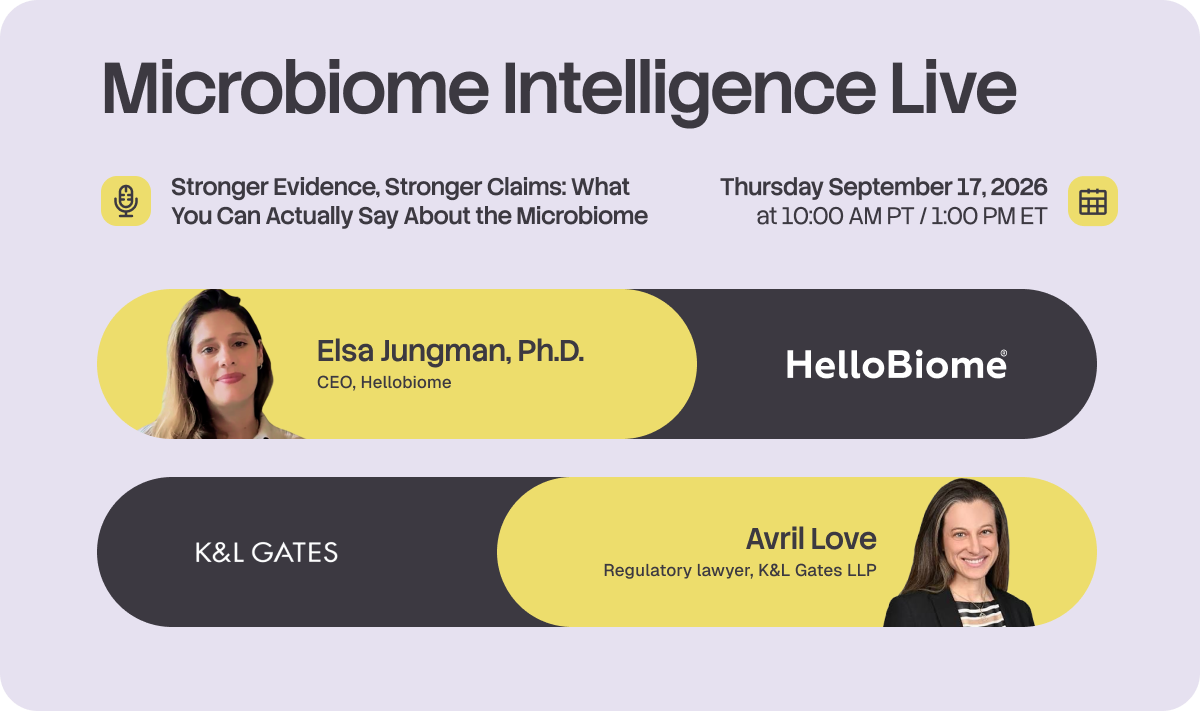
It’s the exact question Elsa Jungman, Ph.D., CEO & Founder of HelloBiome, and Avril Love, regulatory lawyer and partner at K&L Gates, addressed in a live session on September 17. Watch the session to learn what makes a microbiome claim hold up once it meets legal, regulatory, and retailer scrutiny.
From Measured to Defensible Microbiome Claims
HelloBiome’s Clinical Claims Studies exist for cosmetic claims validation — confirming whether a product supports or disrupts the microbiome and turning that result into a claim a team can actually defend.
That result comes from a clinical claims study built for skincare — graded directly from the study data, not assigned by a reviewer or tied to a fee, so a claim built on it can survive scrutiny. A result that doesn’t move is itself evidence: proof the product left the microbiome undisturbed, not a failed outcome.
What’s the claim you’re planning next — and does the data back it up?