


After a great event at Supplier’s Day 2026 in New York, we wanted to take a moment to share some of our key observations from the show.
At last year’s show, we spent a lot of time explaining the importance of the microbiome; attendees were curious, but still interested in learning more.
This year, that curiosity has shifted into decision making. The majority of our conversations were based more in urgency, with attendees interested in how to not just collect microbiome data, but use it to translate into product development and application.
From curiosity to readiness

As the industry moves from exploration to decision-making, the key value is clear:
Microbiome data is now being used to directly improve formulation, accelerate R&D, and support scientifically defensible product claims.
In our work with COSMAX, we demonstrated how microbiome intelligence translates into real product outcomes — including mechanism-backed efficacy claims, clearer ingredient selection, and differentiated positioning on shelf.
We discussed this during our live presentation, where we focused on how microbiome science operates within real product contexts:
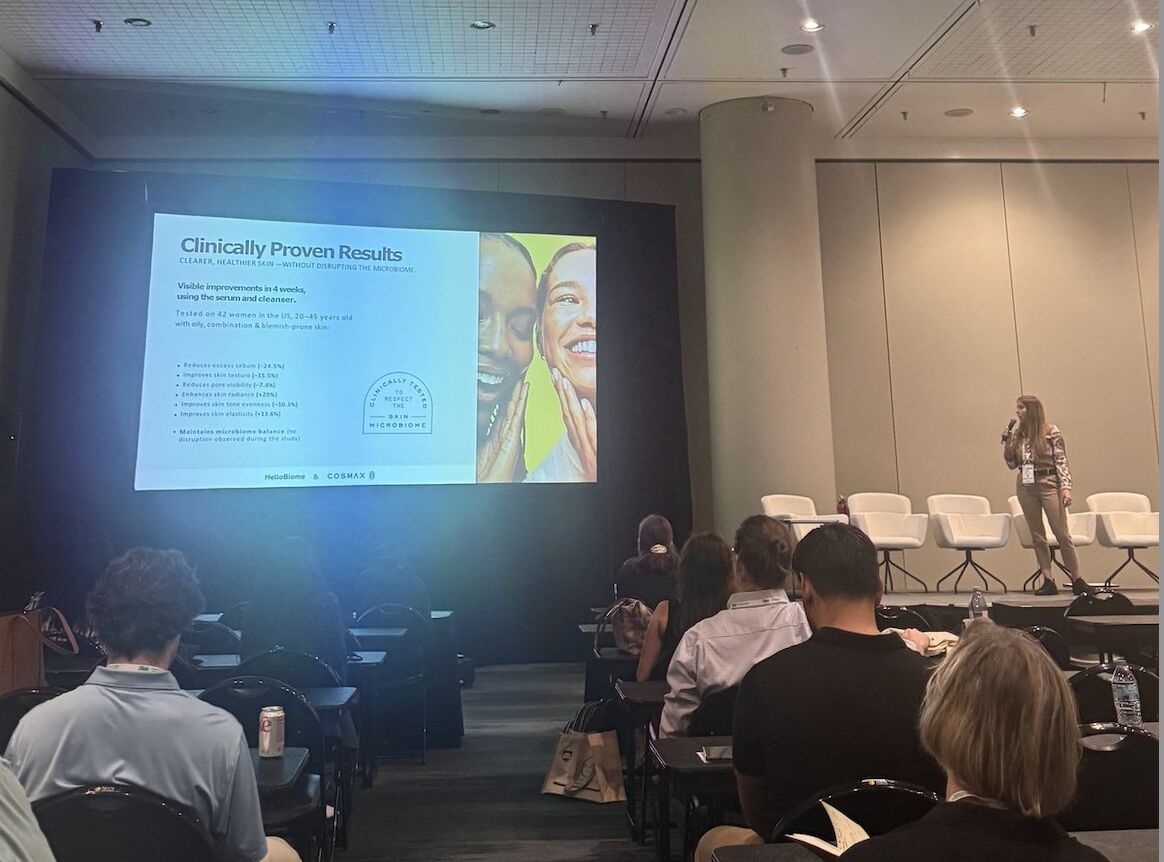
– Real-world data collection, where live skin microbiome sampling grounds insights in product-relevant conditions
– Decision-ready interpretation, structuring outputs into formats teams can act on directly
– Biological mechanism-based validation before committing to clinical claims or launches
– A full microbiome perspective, including both bacterial and fungal communities
– Integration with AI models to support efficacy-driven and evidence-based evaluation
What does this mean for the industry?
More often, the challenge is to make microbiome data usable in real product contexts, no longer just collecting.
Product differentiation is increasingly defined by how effectively microbiome data is translated into decisions across formulation, defensible proofs, clinical claims, and development workflows.
Most of the people we talked to at the show had one of three needs:
– Interpretable microbiome outputs: Clear signals that indicate what is changing and why it matters for product performance;
– Direct linkage to formulation: Ensuring microbiome shifts inform ingredient selection and efficacy, rather than existing as parallel data streams;
– Defensible claim construction: Grounding claims in measurable biological outcomes.
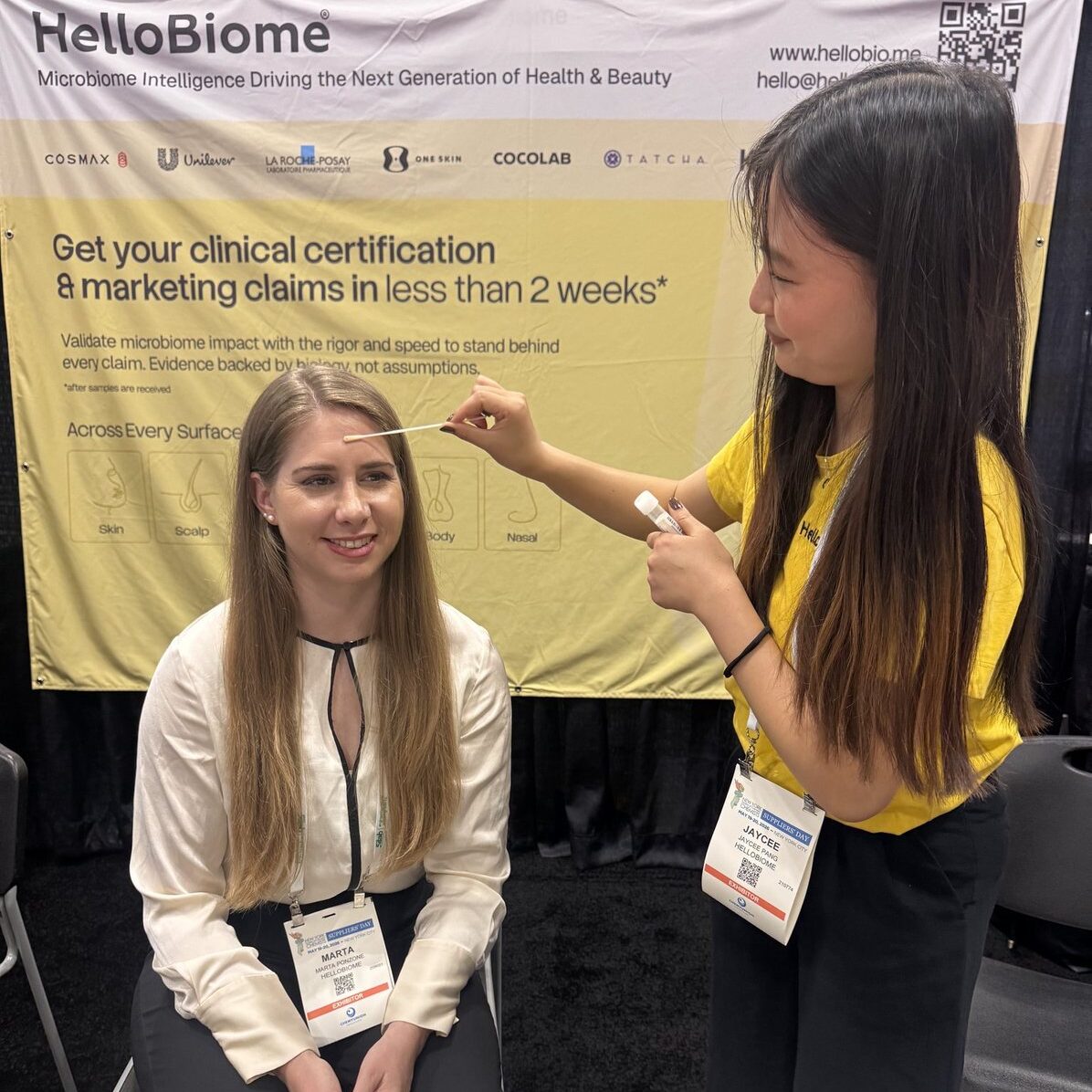
From microbiome data to product decisions
The shift is toward turning complex biological outputs into signals that directly guide formulation, claims, and product development. This is where microbiome science becomes a decision layer on how products are designed, validated, and brought to market.
Ready to make microbiome insight usable within real product decisions?