

The microbiome is no longer a niche scientific concept. It is becoming a defining factor in how products are developed, validated, and marketed across beauty and consumer health.
Global searches for “skin + microbiome” grew 177% year-over-year, with “scalp + microbiome” up 120% (BeautyMatter, 2025). The broader microbiome skincare market is projected to reach USD 835 million by 2030, growing at over 12% annually (Grand View Research). The science is moving fast. Consumer expectations are moving faster.
For brands, this shift creates both an opportunity and an obligation: the claims you make about microbiome impact now need to be backed by measurable, defensible evidence. Here’s why that matters — and what it means for your next product decision.
The Shift: From Elimination to Balance
For decades, product development in beauty and oral care operated on a simple premise: bacteria are the enemy. Formulations were designed to strip, sterilize, and suppress. But the science has fundamentally shifted. We now understand that the microbiome — the trillions of bacteria, fungi, and other microorganisms living on our skin, scalp, oral cavity, and other body areas — plays a critical role in everything from barrier function to long-term skin health.
Chrystle Cu, Co-founder and Co-CEO of COCOLAB, put it simply: “Consumers used to believe oral care was about killing germs. Today people understand that bacteria are part of our biology, and that maintaining balance in the microbiome is essential to long-term health.” (COCOLAB Case study)
This isn’t just a consumer perception shift. Regulators are following. The EU’s Commission Regulation (EU) No 655/2013 requires substantiation for every cosmetic claim, and microbiome-related language is coming under increasing scrutiny. In the U.S., the FDA’s MoCRA framework now mandates adequate safety substantiation for every cosmetic product. The bar for credibility is rising.
What’s at Stake When You Don’t Measure Microbiome Impact
Many products still disrupt the microbiome unintentionally — and traditional testing methods don’t capture it. Without microbiome-level data, brands face a set of compounding risks: claims that are vague or indefensible, products that show short-term results but degrade the biological ecosystem over time, and missed differentiation in categories where competitors are starting to invest in proof.
The cost of inaction isn’t just regulatory exposure. It’s the lost ability to tell a credible, differentiated story at a time when consumers and retail buyers are actively looking for it.
A New Tier of Claims — and What It Takes to Earn Them
Microbiome balance is creating an entirely new hierarchy of product claims — claims that go beyond generic “gentle” or “dermatologist-tested” language and into territory that’s measurable and specific.
At the first level, a product can demonstrate that it does not disrupt the existing microbiome. This enables claims like “Respects the skin microbiome” or “Respects the oral microbiome.” It’s a meaningful proof point: the product works with biology, not against it.
At the second level, a product can show it actively supports or improves microbiome balance — maintaining diversity, reinforcing beneficial microbial communities, or strengthening the ecosystem. This enables stronger claims: “Supports microbiome diversity,” “Maintains a balanced microbiome,” or “Helps reinforce a healthy ecosystem.”
Both tiers require clinical evidence. Without measurement, these claims remain aspirational. With it, they become defensible differentiators.
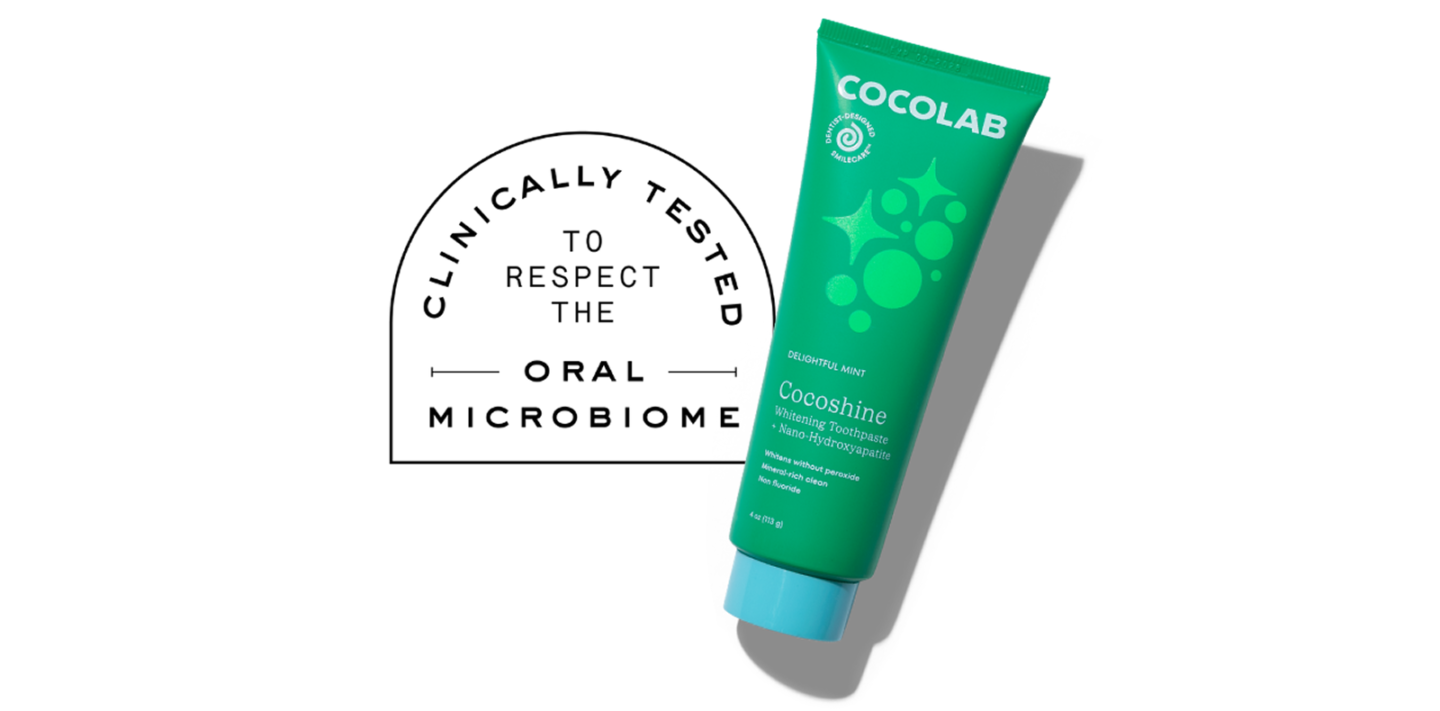
COCOLAB earned these claims for their Cocoshine Whitening Toothpaste through a clinical study with HelloBiome that demonstrated the product respects the oral microbiome and maintains diversity during daily use. The result: a clinically substantiated claim they could stand behind on packaging, on their product page, and at retail. COCOLAB now carries the HelloBiome Microbiome Seal — a visible mark of validated microbiome impact.
Turning Microbiome Balance Into a Competitive Advantage
The brands pulling ahead aren’t waiting for microbiome science to become standard. They’re making it standard — integrating microbiome measurement into their product development and validation cycles now.
What sets this apart from traditional clinical testing is the depth of data. Comprehensive microbiome analysis measures both bacteria and fungi across body areas — skin, scalp, oral, intimate, nasal, and body — capturing the full biological picture rather than a partial snapshot. That depth is what makes the difference between a claim that holds up under scrutiny and one that doesn’t.
Through Clinical Claims Studies, brands can validate whether a product supports or disrupts the microbiome with defensible clinical proof. The data translates directly into marketing-ready assets: claims for packaging, product detail pages, and retail presentations. And for brands that meet the standard, the HelloBiome Microbiome Seal provides a consumer-facing trust signal that goes beyond self-reported results.
The business impact is tangible: stronger, more defensible product claims; clear differentiation in crowded categories; and increased trust from consumers, retail buyers, and regulatory bodies alike.